



产品货号 : mlR16273
英文名称 : GPCR150
中文名称 : G蛋白偶联受体150抗体
别 名 : G protein coupled receptor 150; G protein coupled receptor 160; G-protein coupled receptor GPCR1; GCPR 160; GCPR160; GP160_HUMAN; GPCR 1; GPCR 150; GPCR1; GPCR150; GPR 150; GPR 160; GPR150; Gpr160; hGPCR1; Probable G-protein coupled receptor 160; Putative G protein coupled receptor.
研究领域 : 信号转导 G蛋白偶联受体 G蛋白信号
抗体来源 : Rabbit
克隆类型 : Polyclonal
交叉反应 : Human,
产品应用 : WB=1:500-2000 ELISA=1:500-1000 IHC-P=1:400-800 IHC-F=1:400-800 ICC=1:100-500 IF=1:100-500 (石蜡切片需做抗原修复)
not yet tested in other applications.
optimal dilutions/concentrations should be determined by the end user.
分 子 量 : 40kDa
细胞定位 : 细胞膜
性 状 : Lyophilized or Liquid
浓 度 : 1mg/ml
免 疫 原 : KLH conjugated synthetic peptide derived from human GPCR150:101-200/338 <Extracellular>
亚 型 : IgG
纯化方法 : affinity purified by Protein A
储 存 液 : 0.01M TBS(pH7.4) with 1% BSA, 0.03% Proclin300 and 50% Glycerol.
保存条件 : Store at -20 °C for one year. Avoid repeated freeze/thaw cycles. The lyophilized antibody is stable at room temperature for at least one month and for greater than a year when kept at -20°C. When reconstituted in sterile pH 7.4 0.01M PBS or diluent of antibody the antibody is stable for at least two weeks at 2-4 °C.
PubMed : PubMed
产品介绍 : G protein-coupled receptors (GPRs), also known as seven transmembrane receptors, heptahelical receptors or 7TM receptors, comprise a superfamily of proteins that play a role in many different stimulus-response pathways. GPR signaling is an evolutionarily ancient mechanism used by all eukaryotes to sense environmental stimuli and mediate cell-cell communication. G protein-coupled receptors translate extracellular signals into intracellular signals (G protein activation) and they respond to a variety of signaling molecules, such as hormones and neurotransmitters. The gene encoding GPR160 maps to human chromosome 3, which houses over 1,100 genes, including a chemokine receptor (CKR) gene cluster and a variety of human cancer-related gene loci. GPR160 expression has been shown to be up-regulated in prostate cancer.
Function:
Orphan receptor.
Subcellular Location:
Cell membrane.
Similarity:
Belongs to the G-protein coupled receptor 1 family.
SWISS:
Q9UJ42
Gene ID:
26996
Important Note:
This product as supplied is intended for research use only, not for use in human, therapeutic or diagnostic applications.
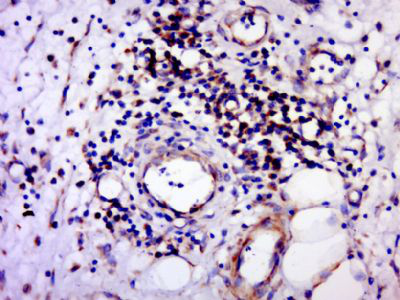
产品图片