




产品货号 : mlR12480
英文名称 : AP2 alpha + beta
中文名称 : 转录因子AP2α+β抗体
别 名 : Activating enhancer binding protein 2 alpha; Activating enhancer binding protein 2 beta; AP2TF; TFAP2; TFAP2A; TFAP2B; Transcription factor AP2 alpha; Transcription factor AP2 beta; AP2A_HUMAN; AP2B_HUMAN.
研究领域 : 肿瘤 发育生物学 转录调节因子 结合蛋白 细胞分化 表观遗传学
抗体来源 : Rabbit
克隆类型 : Polyclonal
交叉反应 : Human, Mouse, Rat, Chicken, Dog, Pig, Horse, Rabbit, Sheep,
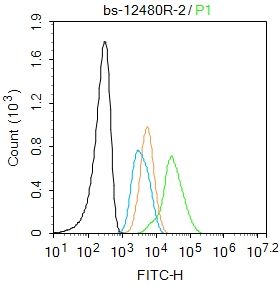
产品应用 : WB=1:500-2000 ELISA=1:500-1000 IHC-P=1:400-800 IHC-F=1:400-800 Flow-Cyt=2ug/Test ICC=1:100-500 IF=1:100-500 (石蜡切片需做抗原修复)
not yet tested in other applications.
optimal dilutions/concentrations should be determined by the end user.
分 子 量 : 48kDa
细胞定位 : 细胞核
性 状 : Lyophilized or Liquid
浓 度 : 1mg/ml
免 疫 原 : KLH conjugated synthetic peptide derived from human AP2 alpha + beta:201-300/437
亚 型 : IgG
纯化方法 : affinity purified by Protein A
储 存 液 : 0.01M TBS(pH7.4) with 1% BSA, 0.03% Proclin300 and 50% Glycerol.
保存条件 : Store at -20 °C for one year. Avoid repeated freeze/thaw cycles. The lyophilized antibody is stable at room temperature for at least one month and for greater than a year when kept at -20°C. When reconstituted in sterile pH 7.4 0.01M PBS or diluent of antibody the antibody is stable for at least two weeks at 2-4 °C.
PubMed : PubMed
产品介绍 : The AP2 proteins are normally expressed in ectodermally derived vertebrate tissues where they are necessary for normal growth and development. The factors have also been implicated in the control of cell proliferation, viral transformation, and oncogenesis. AP2 seems to play in important role in human breast cancer. AP2 alpha is the only AP2 protein required for early morphogenesis of the lens vesicle. AP2 beta appears to be required for normal face and limb development and for proper terminal differentiation and function of renal tubular epithelia.
Function:
Sequence-specific DNA-binding protein that interacts with inducible viral and cellular enhancer elements to regulate transcription of selected genes. AP-2 factors bind to the consensus sequence 5'-GCCNNNGGC-3' and activate genes involved in a large spectrum of important biological functions including proper eye, face, body wall, limb and neural tube development. They also suppress a number of genes including MCAM/MUC18, C/EBP alpha and MYC. AP-2-alpha is the only AP-2 protein required for early morphogenesis of the lens vesicle. Together with the CITED2 coactivator, stimulates the PITX2 P1 promoter transcription activation. Associates with chromatin to the PITX2 P1 promoter region.
Subunit:
Binds DNA as a dimer. Can form homodimers or heterodimers with other AP-2 family members. Interacts with WWOX. Interacts with CITED4. Interacts with UBE2I. Interacts with RALBP1 in a complex also containing EPN1 and NUMB during interphase and mitosis. Interacts with KCTD1; this interaction represses transcription activation. Interacts (via C-terminus) with CITED2 (via C-terminus); the interaction stimulates TFAP2A-transcriptional activation. Interacts (via N-terminus) with EP300 (via N-terminus); the interaction requires CITED2.
Subcellular Location:
Nuclear.
Post-translational modifications:
Sumoylated on Lys-10; which inhibits transcriptional activity (Probable).
DISEASE:
Defects in TFAP2A are the cause of branchiooculofacial syndrome (BOFS) [MIM:113620]; also known as branchial clefts with characteristic facies, growth retardation, imperforate nasolacrimal duct, and premature aging or lip pseudocleft-hemangiomatous branchial cyst syndrome. BOFS is a rare autosomal dominant cleft palate craniofacial disorder with variable expressivity. The major features include cutaneous anomalies, ocular anomalies, characteristic facial appearance (malformed pinnae, oral clefts), and, less commonly, renal and ectodermal (dental and hair) anomalies.
Similarity:
Belongs to the AP-2 family.
SWISS:
P05549 Q92481
Gene ID:
7020 7021
Important Note:
This product as supplied is intended for research use only, not for use in human, therapeutic or diagnostic applications.
产品图片